UBCM Community Excellence Awards
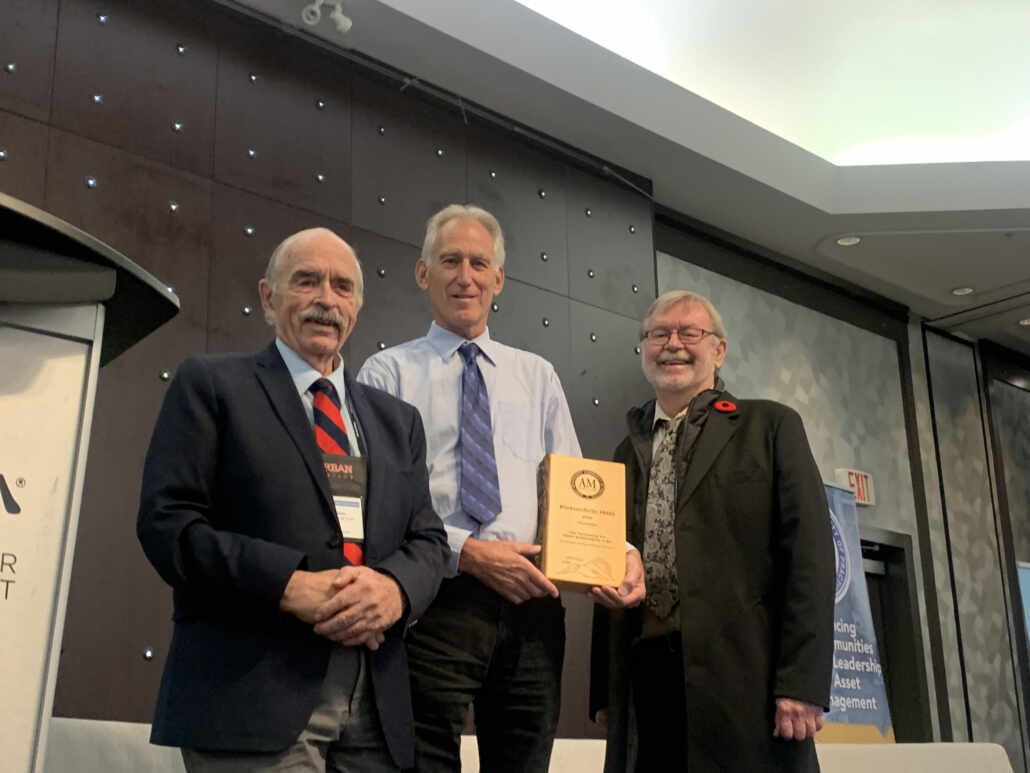
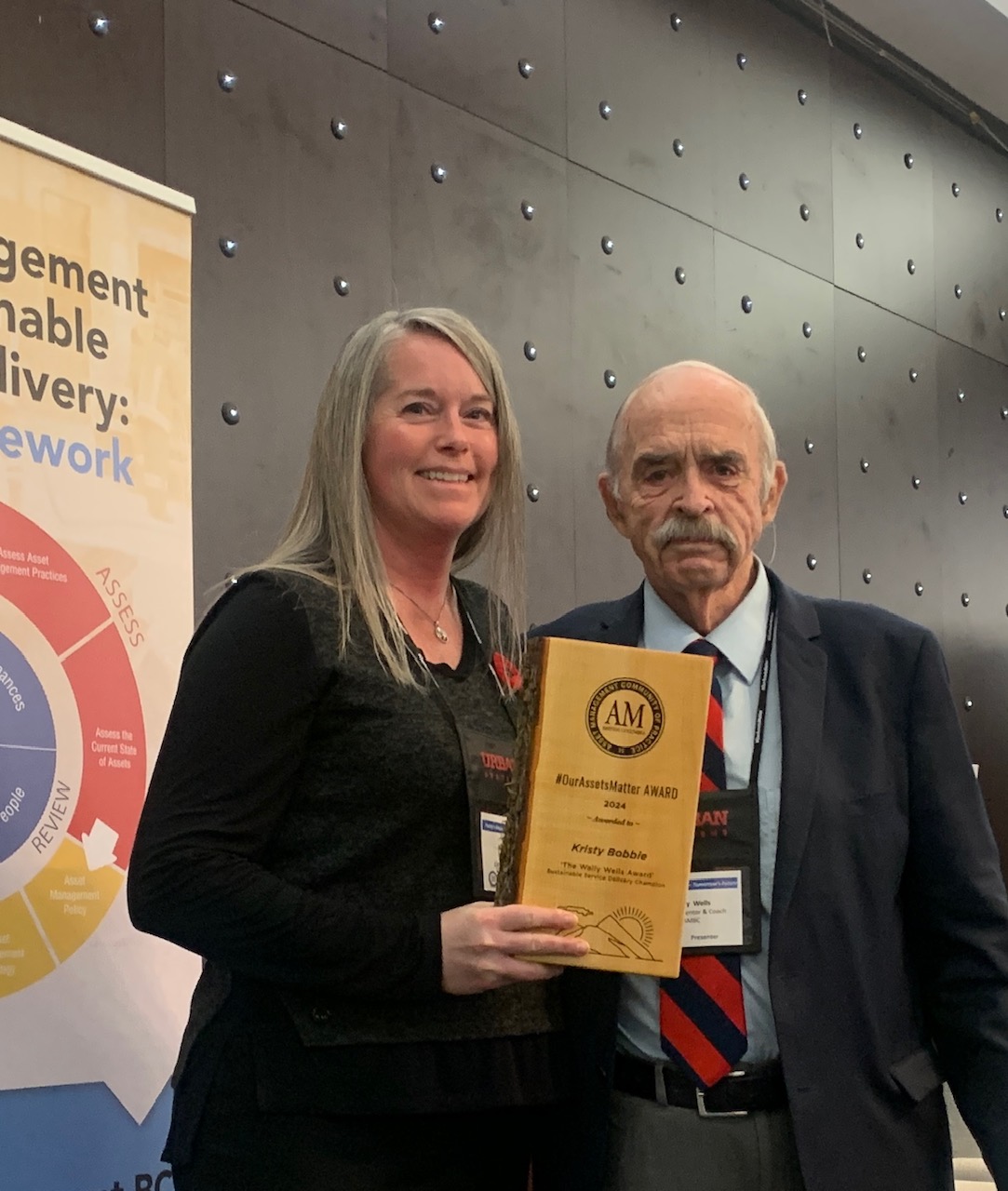
On September 23, 2025, at the 2025 UBCM Conference, UBCM announced the winners of the Community Excellence Awards.
The City of Greenwood was the recipient of the 2025 UBCM Community Award for Excellence in Asset Management for their implementation of Resilient Greenwood – Building the Future Together.
The City of Greenwood is pioneering a transformative approach to infrasturcture planning by integrating strategic asset management with proactive community engagement. This forward-thinking initiative, led in partnership with Strategic Leadership Solutions and LandInfo Technologies Inc., is redefining how municipalities sustain essential services like water, roads, and waste management – and how they shift the narrative from talking about taxes to focusing on services.
—–
The District of Saanich was the recipient of the 2025 UBCM Presidents Committee Choice Award for their Asset management Strategy and Implementation Plan.
In 2023, Council approved Saanich’s first-generation Asset Management Strategy and Implementation Plan, providing a road map for the continuous improvement of Saanich’s asset management practices towards the goal of sustainable service delivery.
The project scope covers all of Saanich’s built and natural assets. Project activities included assessing current state, identifying gaps, and prioritizing actions for continuous improvement. The Asset Management Strategy and Implementation Plan prioritizes ten strategic themes with forty-eight projects to be completed from 2023-2027.
Congratulations to the City of Greenwood and District of Saanich on their asset management accomplishments, and to the other award winners this year.
You can find more information on the Community Excellence Awards on the UBCM website at:
https://www.ubcm.ca/convention-resolutions/awards/community-excellence-awards
If you’re looking to improve your understanding of infrastructure asset management in British Columbia, the recording of Asset Management BC’s popular webinar, Money Isn’t Everything (But It’s Close), is now available to watch online.
This free, expert-led session explores the connection between financial decision-making and sustainable service delivery—an essential topic for local governments, finance officers, public works professionals, and asset managers across B.C.
👉 Click here to watch the asset management webinar now
What You’ll Learn in This Asset Management BC Webinar
This webinar breaks down why financial literacy is vital in asset management planning, how to interpret and apply financial data in real-world municipal contexts, and how to better align your budget with long-term infrastructure goals.
Whether you’re new to asset management or advancing your community’s strategy, this session offers valuable insights into:
- How to connect financial plans with infrastructure planning
- Common challenges in asset management financing
- Strategies to communicate the importance of funding for sustainable services
It’s an ideal learning resource for anyone working in or with local governments in British Columbia.
Asset Management Training Opportunities in British Columbia
Looking for more ways to build your asset management capacity?
Asset Management BC offers a range of training options to support professionals and communities across the province. These programs are designed to meet the needs of both technical and non-technical staff working on sustainable service delivery.
Explore current and upcoming training offerings here:
🔗 Asset Management BC Training
New Courses Coming Soon with AMBC & icInfrastructure
In partnership with icInfrastructure, AMBC will soon be launching additional asset management training opportunities tailored to B.C.’s unique context. These courses will focus on key topics like:
- Asset management for small and rural communities
- Training for elected officials and senior staff
- Building core competencies for sustainable infrastructure planning
Stay updated and learn more about upcoming courses here:
🔗 AMBC + icInfrastructure Training Portal
Why Asset Management Matters in B.C.
With aging infrastructure, climate challenges, and tight municipal budgets, effective asset management is more important than ever. Training and webinars like these are essential for empowering local governments in B.C. to make informed, cost-effective decisions that support sustainable communities.
Whether you’re in public works, finance, planning, or governance, take advantage of these accessible learning tools to improve your organization’s asset management capacity.
Don’t miss out — watch the webinar, share it with your team, and explore the training options available to communities throughout British Columbia.
How do you plan, fund, and sustain your community’s core services—today and 25 years from now? Brought to you by Asset Management BC, view a recording of this insight-packed, free webinar that shines a light on how one small city is doing just that:
➡️ Watch the webinar recording
Free Webinar: What to Expect
We’re thrilled to welcome Chris Barlow, Chief Administrative Officer for the City of Castlegar, as he walks us through the community’s strategic asset management evolution. From climate risk to rate setting, this session will provide a real-world look at how Castlegar is building a resilient, well-funded future for its infrastructure and services.
This free webinar will highlight how Castlegar is:
-
Bridging the funding gap for core infrastructure through smart planning and prioritization.
-
Designing transparent tax and utility rate strategies that work.
-
Factoring in climate change, risk, and condition assessments to shape long-term infrastructure plans.
-
Building internal capacity, including staffing plans to support their asset management goals.
-
Communicating with clarity to build public and council trust—and keep moving forward, even when the going gets tough.
Whether you’re a CAO, finance officer, public works leader, or elected official, you’ll come away with practical, adaptable strategies to strengthen your asset management practices.
About Chris Barlow:
Why This Matters
Castlegar is proving that asset management isn’t just about spreadsheets and budgets—it’s about building trust, making hard choices, and taking action that serves the community now and into the future. If you’re looking to shift your municipality or organization from reactive maintenance to proactive planning, this is a conversation you don’t want to miss.
Bonus: Expand Your Skills with Upcoming Training
This webinar is part of a broader initiative supported by the Federation of Canadian Municipalities’ Green Municipal Fund and the Government of Canada, and delivered by icInfrastructure, AMBC’s trusted training partner.
Looking to dive deeper into climate adaptation and infrastructure leadership? Check out the Local Leadership for Climate Adaptation (LLCA) training series:
👉 Explore upcoming training with AMBC
Want More Asset Management Presentations & Training?
Join us at the 2025 AMBC Conference for more excellent presentations and opportunities to advance your asset management practice! This year’s theme is Advancing Asset Management in a Changing World. Connect with peers, learn from experts, and walk away with a new sense of confidence in how to approach asset management in your community.
📅 Date: November 5-6, 2025
📍 Location: Radisson Vancouver Airport Hotel, Richmond
📢 Learn more & register for the 2025 AMBC Conference
Don’t Miss It
This is your chance to learn from a community that’s making asset management real, resilient, and results-driven.
CCBF Regional Workshops | May – June , 2025 | 9:30 AM – 3:30 PM | Various Dates & Locations Across BC
Union of BC Municipalities (UBCM) is pleased to announce a new round of Canada Community-Building Fund (CCBF) Regional Workshops, happening throughout the province from May 14 to June 17, 2025. These no-cost, full-day sessions are designed to support local governments in understanding and navigating the latest updates related to CCBF funding streams and asset management practices.
Whether you’re in senior leadership or involved in grant administration, project delivery, or municipal asset management, these sessions will offer timely insights and actionable guidance to help your community maximize its use of CCBF funding.
Why You Should Attend
This year’s workshops will focus on several key areas, including:
-
Updates to the Community Works Fund
-
The Strategic Priorities Fund program
With the Province continuing to expand and refine its approach to infrastructure investment and data-informed decision-making, this is a valuable opportunity to stay informed and prepared.
What to Expect
-
In-person, full-day workshops from 9:30 AM to 3:30 PM
-
Lunch provided for all attendees
-
Free to attend – no registration fees
-
Engaging, practical content geared toward real-world implementation
-
Networking opportunities with peers across the region
Please note: space is limited at each session, and early registration is encouraged. We ask that participants register at least 14 days in advance of their chosen workshop date to secure their spot.
👉 Click here to view workshop dates and register
Learn More About Asset Management Data Collection in 2025
As part of the updated reporting requirements, the Province is undertaking a comprehensive asset management data collection effort in 2025. This initiative supports long-term infrastructure planning by helping local governments build consistent, reliable data sets to inform decision-making and identify funding needs.
You can read more about the provincial approach to asset management data collection and what it means for your community on the Asset Management BC website.
**The Submission Deadline is over for the 2025 UBCM Community Excellence Awards.**
Thank you to everyone for your submissions this year. Stay tuned for the announcement of the winners at the 2025 UBCM Convention in Victoria on September 22-26, 2025.
—–
Has your local government or First Nation implemented an outstanding program or project this year? Showcase your achievements by applying for the 2025 UBCM Community Excellence Awards! These prestigious awards recognize innovation and leadership in local government across British Columbia. The deadline for submissions is May 30, 2025.
Shining a Spotlight on Asset Management Excellence
One of the key award categories, Excellence in Asset Management, honours local governments that have demonstrated outstanding stewardship of public assets. Whether it’s infrastructure improvements, innovative maintenance strategies, or long-term planning initiatives, this award highlights best practices in managing community resources efficiently and sustainably.
Past winners include the City of Kelowna’s ‘Enterprise Asset Management System Implementation’, which set a benchmark for integrating asset management solutions. If your local government has developed a project that enhances asset performance, sustainability, and cost efficiency, now is the time to get recognized!
Other Award Categories
In addition to Excellence in Asset Management, UBCM will recognize projects that excel in the following categories:
- Excellence in Governance – Showcasing effective decision-making and leadership.
- Excellence in Service Delivery – Recognizing innovative and efficient public services.
- Excellence in Sustainability – Highlighting environmental responsibility and resilience.
How to Apply
All UBCM members, including local governments and First Nations, are eligible to submit one application per category. Winners will be announced during the 2025 UBCM Convention, where all delegates are invited to attend the awards ceremony.
For full details, including the Application Form and Guide, visit UBCM’s website. Don’t miss this opportunity to highlight your community’s leadership and innovation!
PS: Want to stay up-to-date on all things asset management? Sign up for the #OurAssetsMatter newsletter!
Keep reading to learn more about important updates to provincial asset management data collection requirements for local government in British Columbia in 2025.
2025 marks a year of change for the Local Government Data Entry and aligns with the renewed Canada Community Building Fund.
The Local Government Data Entry (LGDE) forms, an annual requirement, provide a standardized record of local government financial activities over the past fiscal year and form the basis for the Province’s Local Government Statistics tables.
In 2020, the Province added a new category to the LGDE forms (C2 – Tangible Capital Assets & Asset Management) to commence the collection of Asset Management (AM) data for local governments. The sections within C2 require all local governments to report on Historical Cost, Asset Management Plans and Risk Register Status, and Asset Additions with optional reporting for Asset Age and Replacement Value, and Asset Condition. The LGDE collects AM data in the form of totals by asset class, which are the outputs from local governments’ AM tracking and planning systems.
More information about what AM data fields were added in 2020 can be found here.
What is changing in regards to Local Government Data Entry forms this year?
Beginning in 2025, reporting on the 2024 fiscal year end, the previously optional sections on Asset Age and Replacement Value, and Asset Condition will become required AM reporting. These fields include:
Asset Age and Replacement Value
- Current replacement value
- Annual replacement value amortization
- Average expected life
- Average age
- Average remaining useful life (calculated)
Asset condition
- Physical condition (% breakdown by value)
- Capacity vs. demand utilization (% breakdown by value)
- Functionality (% breakdown by value)
What is new about asset management data collection in 2025?
New mandatory fields are being added to report on where each local government currently stands in their AM process. These fields include:
Organization Asset Management
- Asset management strategy in place? (Y/N)
- Asset management policy in place? (Y/N)
- Risk assessment completed? (Y/N)
- Long-Term Financial Plan (LTFP) linked to AM plan(s)? (Y/N)
- Current LTFP horizon (years)?
- LTFP available online? (Y/N)
- Asset inventory completed? (Y/N)
- Natural assets inventory completed? (Y/N)
Asset Management Progress by Asset Class
- Asset Inventory (Y/N)
- Long-Term Financial Plan (Y/N).
Why are asset management reporting requirements being expanded?
Changing asset management fields from optional to mandatory is a staged progression to improve data quality and to start consistently gathering AM data. The newly collected asset management data will help encourage better long term financial and asset management plans and measure the progress of sustainable service delivery.
Asset Management is a core commitment in the Canada Community Building Fund (CCBF). The CCBF is a tripartite Agreement between Canada, British Columbia, and the Union of BC Municipalities (UBCM), administered by UBCM, which provides predictable, long-term and stable funding to local governments for investment in infrastructure and capacity-building projects over 10 years.
The renewed agreement (2024 – 2034) continues to support strengthening the capacity to develop and implement asset management best practices as integral to delivering community services in a socially, economically and environmentally sustainable manner and recognizes that the measures contained in the prior agreement (2014-2024) were effective in increasing the capacity of local governments to enhance their community’s sustainability.
In the new agreement there are four key Asset Management Commitments:
- Reporting on continuous improvement of Asset Management practices over the duration of the Agreement, including reporting through the Ministry of Municipal Affairs Local Government Data Entry (LGDE) System,
- Development and implementation of Long-term Financial Plans
- Ongoing Asset Management education and training, and
- Implementing asset management performance measurement
The AM data collected through the LGDE provides a unified collection of data to help satisfy AM reporting requirements noted in CCBF, reducing additional reporting needs, such as the past surveys, for local governments.
How will this data be used?
The expanded AM data will provide the Province with a more accurate measure of the state of local government infrastructure, the progress of asset management, and monitor the overall financial health of the local government system.
More specifically, the Province will use the data to:
- Calculate and monitor key sustainability ratios;
- Identify trends, gaps, needs, and concerns;
- Produce an annual “Statement of Tangible Capital Assets” report for each local government; and
- Inform future infrastructure grant programs and support resources
- Share data with UBCM to meet CCBF reporting requirements.
The annual submission deadline for LGDE forms for all local governments is May 15th of each year.
Resources and support
Updated versions of the LGDE help manuals will be posted in March when the revised LGDE forms are released for 2024 fiscal year data input. The LGDE help manuals include additional definitions and guidance to cover the new AM sections.
Please share your questions and suggestions with the Local Government Infrastructure and Finance Branch through email at [email protected].
Receive important asset management updates straight to your inbox
Article by BC Ministry Staff
Local Government Infrastructure and Finance Branch